Ingredients
Equipment
Method
- Step 1: Prepare the pudding base. Mix the pudding powder with the sugar and approx. 100 ml of the milk until smooth. Bring the remaining milk to a boil in a pot. Pour the mixed pudding mixture into the boiling milk while stirring and let it briefly boil until the pudding thickens. Remove from heat and let the pudding cool completely. To prevent a skin from forming, press plastic wrap directly onto the surface of the hot pudding. Once cold, stir it well or push it through a fine sieve for a smooth cream.
- Step 2: While the pudding cools, prepare the gelatine. Soak the gelatine leaves in cold water until soft (just a few minutes). Squeeze them well. Gently warm the Cointreau (or orange juice) in a small pot or microwave – it should be warm, not boiling. Dissolve the squeezed gelatine in it while stirring. Take about 3 tablespoons of the cooled pudding and vigorously stir it into the warm gelatine solution (this is tempering to prevent lumps). Quickly pour this mixture into the remaining pudding while stirring. Stir well to distribute everything evenly.
- Step 3: Now, whip the 500 ml of heavy cream until stiff. Carefully fold the whipped cream into the pudding-gelatine mixture using a spatula. Be gentle to keep the cream airy. This is your wonderful creamy Malakoff cake cream!
- Step 4: Place an adjustable cake ring (approx. 24-26 cm diameter) directly onto the cake plate you want to serve the cake on. Use a small dollop of cream to 'glue' the ladyfingers upright against the inside edge of the ring. This provides stability and looks nice.
- Step 5: Mix the 500 ml milk with the tablespoon of rum (or aroma/juice) in a deep plate. Take the remaining ladyfingers. Quickly dip each ladyfinger only briefly (really just 2-3 seconds!) on one side into the milk-rum mixture. Place them soaked-side down closely together as the base layer in the cake ring. Press gently. If you soak them too long, they will become mushy!
- Step 6: Spread a layer of your delicious cream over the ladyfinger base with a spoon or palette knife and smooth it out. Place another layer of briefly soaked ladyfingers on top.
- Step 7: Repeat the layering: cream, ladyfingers, cream, ladyfingers... The amount of cream is enough for about 5 layers of ladyfingers. The top layer should be cream. Smooth the final cream layer nicely.
- Step 8: Carefully cover the cake (e.g., with plastic wrap directly on the cream or a cake dome) and place it in the refrigerator. It needs to cool and set thoroughly, ideally overnight or at least for 4-5 hours. Patience is key here!
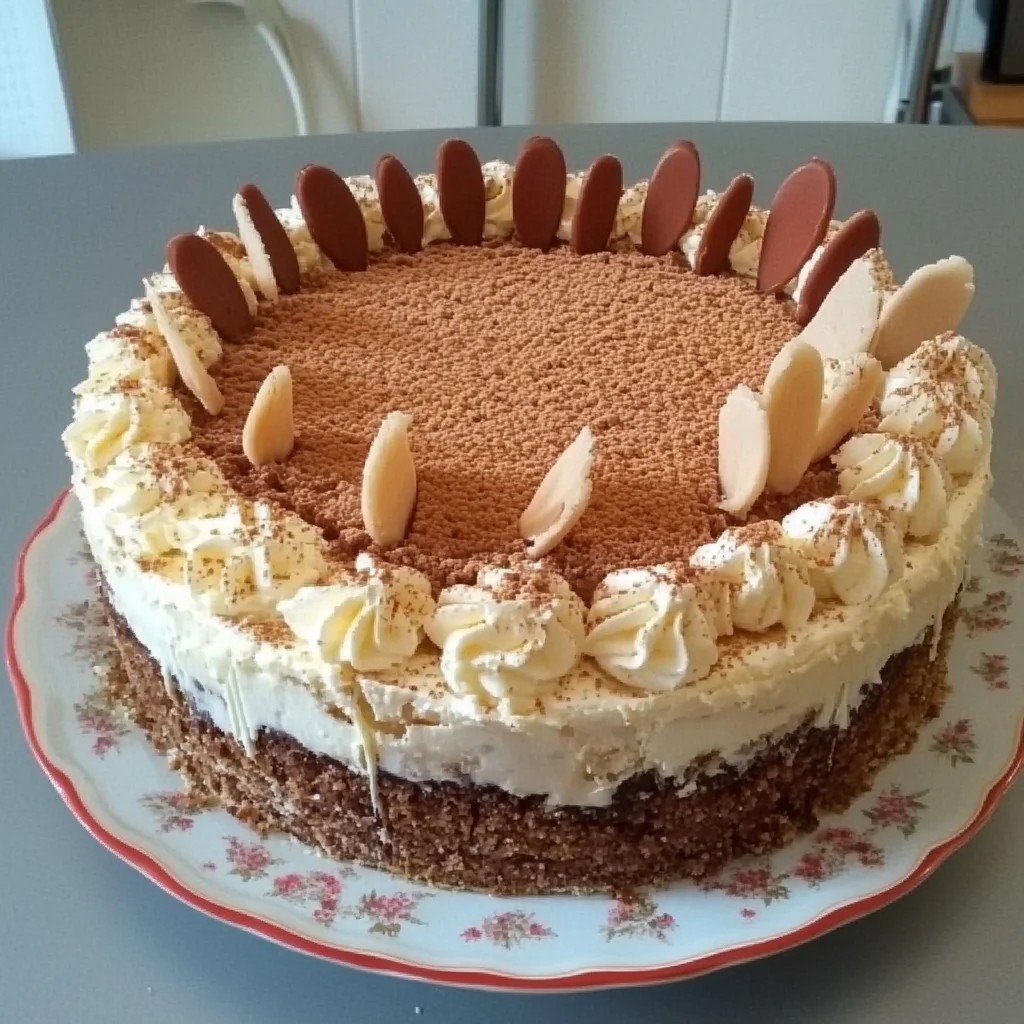
- Step 9: Once the cake is set, prepare the decoration. Whip the remaining 250 ml heavy cream with the whipped cream stabilizer until stiff. For the caramelized almonds, put the sugar in a small pan and let it melt over medium heat until golden brown. Add the sliced almonds and stir quickly until coated with caramel. Immediately pour the caramelized almonds onto a piece of baking paper and let them cool completely. Once cold and hard, carefully break or crumble them.
- Step 10: To release the cake ring, take a flat knife, dip it briefly in warm water, and carefully run it along the inner edge of the ring. Then you can carefully lift the ring upwards.
- Step 11: Spread some of the whipped cream around the edge of the cake (about halfway up or all the way, as you like). Gently press the cooled, caramelized almond pieces onto the whipped cream edge.
- Step 12: You can either smoothly spread the rest of the cream on top or pipe decorative swirls using a piping bag. Finally, sprinkle the top of the cake with the chocolate sprinkles.
Notes
This cake tastes best when well chilled. You can store it well covered (e.g., with plastic wrap or under a cake dome) in the refrigerator for 2-3 days. The ladyfingers will soften over time, which many people especially enjoy with this cake. Freezing is not recommended as the cream's consistency might suffer.