Ingredients
Equipment
Method
- Step 1: Prepare the tart pan. Take a tart pan with a removable bottom (approx. 26 cm diameter). Grease it very well and then dust it with flour. Tap out excess flour. This helps immensely when removing the tart later!
- Step 2: Knead and chill the shortcrust dough. Put all ingredients for the shortcrust pastry in a bowl. Now it's time for some handwork: Knead everything very quickly with your hands into a smooth dough. It is important that the butter remains cold, so don't knead for too long! On a lightly floured surface, roll out the dough slightly larger than your tart pan. Carefully wrap it around the rolling pin and then place it into the prepared pan. Gently press the dough onto the bottom and the edge (the edge should be about 2 cm high). Prick the bottom several times with a fork. Then place it in the refrigerator! The dough should rest for at least 30 minutes so that it behaves well later.
- Step 3: Blind baking – sounds fancy, but is important! Preheat your oven to 180°C (350°F) top/bottom heat. Take the tart pan out of the refrigerator. Lay a sheet of baking paper on the pricked dough base and generously fill it with dried legumes or special blind baking balls. The weight prevents the base from blistering or shrinking during baking. Place the pan in the preheated oven and bake the base with the weights for 8 minutes. Then carefully remove the legumes along with the baking paper (be careful, it's hot!) and bake the base without weights for another 2-3 minutes until it is lightly golden yellow. This is the perfect base for our filling!
- Step 4: Prepare the creamy apricot filling. While the base is in the oven, take care of the filling. In a bowl, whisk together Schmand (or sour cream), sugar, vanilla sugar, and cornstarch until smooth. Then beat in the two eggs one at a time. The mixture should be nice and creamy. Now for the apricots: Wash them well, halve them, and remove the pits. If you like, you can also quarter the halves – depending on how large they are and how you want to arrange them on the tart later.
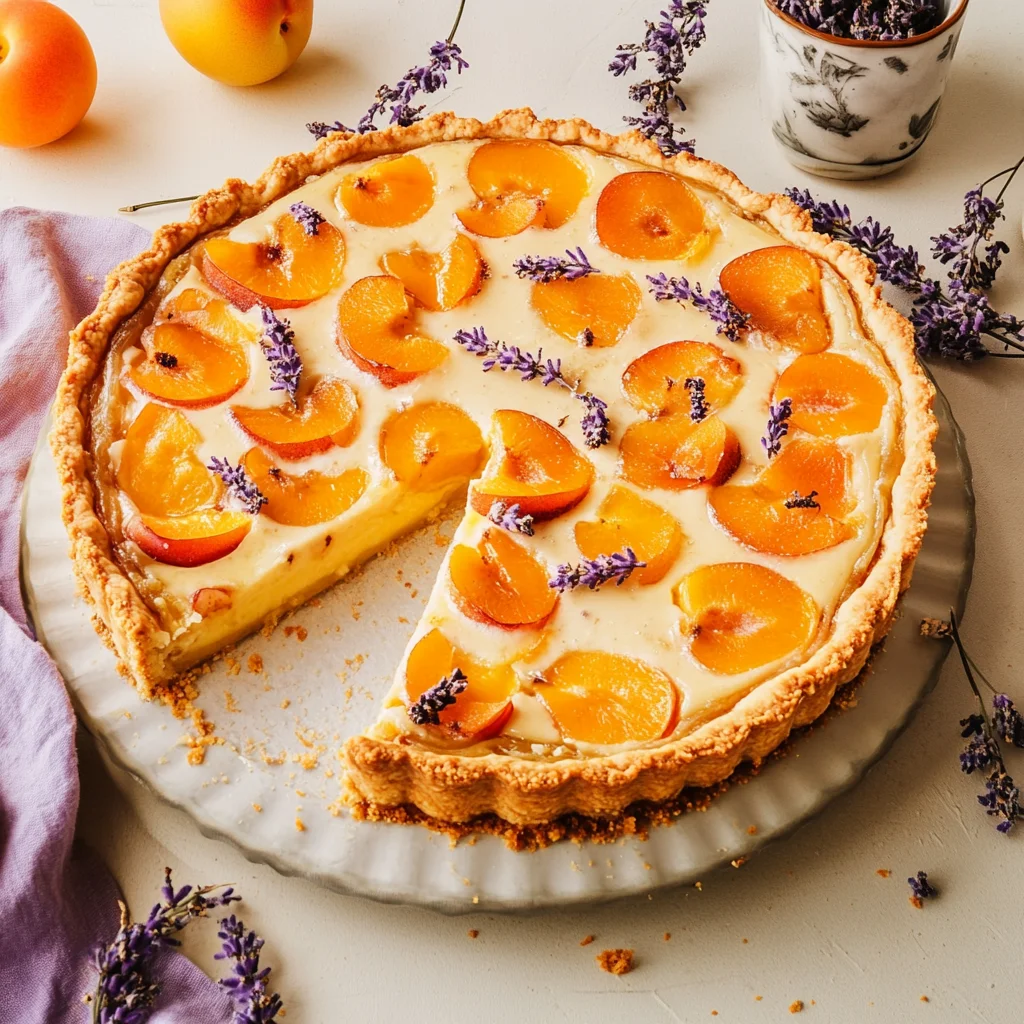
- Step 5: The tart is finished and baked. Take the pre-baked base out of the oven. Carefully pour in the creamy Schmand mixture. Distribute the apricot halves or quarters on top – they look particularly nice with the cut surface facing up! Carefully slide the tart back into the oven and bake for approx. 30-35 minutes. You'll know it's ready when the filling is golden yellow and set (i.e., firm) at the edge, but the center might still wobble slightly. It will become firmer as it cools.
- Step 6: Let it cool. Take the finished tart out of the oven. It now needs some time to set and cool. Let it cool in the pan for at least 15 minutes before preparing the lavender syrup.
- Step 7: The lavender syrup – The special extra. Now comes the exciting part! Put sugar, water, and the dried lavender blossoms in a small pot. Bring the mixture to a boil and let it simmer briefly until the sugar has completely dissolved and a slightly thickened syrup is formed. Take a sniff – this subtle lavender scent is simply wonderful!
- Step 8: The shiny finish. Be ready for the final touch. Generously brush the still slightly warm, but no longer hot, tart with the warm lavender syrup. It's best to use a pastry brush for this. The syrup not only adds shine but also imparts the fine lavender aroma. If you want it to look particularly pretty or emphasize the lavender, sprinkle a few extra dried lavender blossoms over the tart. Now it's best to let the tart cool completely before cutting it. This allows the filling to set properly.
Notes
Variations: Instead of apricots, you can use peaches, nectarines, plums, blackberries, or raspberries. For the cream base, try a mixture of quark and cream or mascarpone, adjusting starch as needed. If lavender isn't your thing, flavor the syrup with vanilla, lemon zest, or a shot of amaretto. Add crunch with streusel on the edge or chopped almonds in the filling or on the fruit.
Tips for Success: Don't over-knead the shortcrust dough. Adhere to the chilling time. Don't forget blind baking for a stable base. Use lavender sparingly – food-grade quality is essential; less is often more for a delicate aroma. Allow the tart to cool completely for the filling to set properly and flavors to develop.
Storage: Store leftovers in an airtight container in the refrigerator for 2-3 days.